La Nuov@ Estate – English version
Uri a historic “villa” nestled between lakes and churches and in its DNA the prickly artichoke
By Franco Cuccuru
Mayor Matteo Dettori: we are committed in tourism cultural
4 MINUTI DI LETTURA
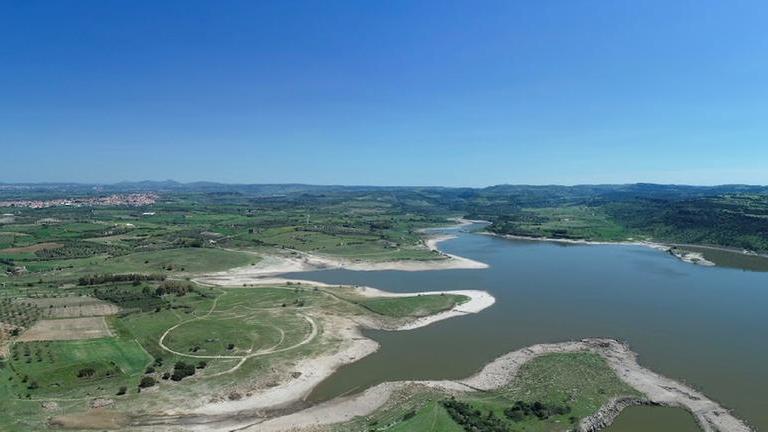
A small town in the heart of Logudoro, Uri is one of the historic villas that composed the ancient curadoria of Coros. It has about 3,000 inhabitants and is located between Alghero and Sassari in the northwestern part of Sardinia. The town stands on a hillside near the Rio Carrabusu a short distance from the Cuga reservoir, surrounded by hundreds of hectares covered with olive groves, vineyards and artichoke plantations. These crops have been attested since the earliest times, consider that a document from the 14th century reports the viticultural vocation of the locality Santa Lene Banjos, just in these months this area is the subject of archaeological reconnaissance by the University of Sassari. The objective of the reconnaissance is to search for the ancient settlement, the adjoining church of Sant'Elena and the “fortified curia”, a unicum according to insiders for the kind of fortification described in an ancient parchment. Another document from 1782 mentions as a crop protected by the local “barracellare” company the artichoke farms that were already producing the area's specialty: the Sardinian prickly artichoke. The origin of the settlement is lost in the mists of time: there is evidence of human presence in the various eras, evidenced by several proto domus located in the historic center and by the presence always in the Urban Center of the nuragic village of Santa Cadrina inhabited continuously until the Byzantine era, as shown by the finds unearthed in the various excavation campaigns and now on display at the Sanna Museum in Sassari. Other sites from ancient times are found in the countryside a short distance from the urban center, including “Sa pedra longa”, the domus of “Monte 'e su preideru”, and the nuraghe of “Sa Mandra”. An area with a high density of archaeological sites is the Cuga basin, which often becomes a place of relaxation for the many fishing enthusiasts. In the matrix center, national civil service volunteers in 2018 proposed the tourist route “il Centro%” which can now be visited thanks to the installation of dedicated paneling that retraces the key places of Uri 'etzu.
Various events take place throughout the year, among the religious events the patronal feast of Our Lady of Patience on Sept. 13 and the evocative feast of Santa Maria di Paulis on Pentecost Tuesday, with a pilgrimage the following day to the Abbey of the same name, one of the oldest festivals attested in the documents kept in the archives of the territory. Two festivals, “Treasures of Sardinia” by the Uri folk group and “Ammentos” organized by the Santa Rughe folk group, repropose traditional costumes and typical dances, as local choirs - Uri Choir and Paulis polyphonic - present traditional singing culture. Food and wine events include the Artichoke Festival now in its XXXI edition, offered the second week of March. There is also a summer edition of the festival to be held next Aug. 4 and 5. Other events are “Sa Die de su Inu” and the “Walk among the olive trees”. In the cultural sphere there is the Cultural Festival “The Squares for History” with the participation of national and international lecturers among the speakers. In Uri there are two libraries, one of the Paulis Cultural Association and a municipal one dedicated to the Uri politician Giovanni Maria Cherchi, the latter with an aggregate fund recently donated by the Siotto Foundation, has a total patrimony of more than 20 thousand volumes. Uri is a virtuous community with about 30 associative realities operating in the territory, active in all areas from assistance, to civil defense, from charitable activities to cultural and folkloric ones, without omitting sports with many sports that involve especially the younger segments of the population, a reality that today thanks to U.S. Atletico Uri that plays in the Serie D soccer league brings the name of the country to the top. The Municipality of Uri has joined the City of Wine and the City of Oil as well as being a founding member of the “Sardinia Island Romanesque Foundation” and being included in the Santa Barbara Mining Trail and the “Funtaneris” water trail. «The administrative action in the tourism sector in recent years has been directed to the rediscovery of a deep identity linked not only to culture but also to the crops and peculiarities of the territory – said Mayor Matteo Emanuele Dettori – which is why our municipality has joined several paths for the enhancement of the territory, first of all “The Pearls of Coros” knowing that by joining forces the results are easier to achieve».
Non lasciare decidere l'algoritmo:
scegli La Nuova Sardegna per le tue notizie su Google